
Commercial Climate Systems Built for Uptime and Load
Commercial HVAC Installation in Duanesburg for offices, retail spaces, and facilities that need reliable year-round conditioning
Pepicelli's Ice Air & Water installs commercial heating and cooling systems designed to handle the occupancy loads, operating hours, and airflow requirements of business environments where downtime affects productivity and customer comfort. You might be opening a new location, replacing a rooftop unit that's reached the end of its service life, or upgrading to equipment that meets current efficiency standards and code requirements. Commercial systems differ from residential units in capacity, construction, and control architecture, and the installation process accounts for roof access, electrical service, gas line routing, and coordination with your building schedule.
Rooftop packaged units combine heating, cooling, and ventilation in one cabinet that sits on a curb-mounted platform, with supply and return ductwork penetrating the roof deck. Split systems separate the condensing unit from the air handler, which may be installed in a mechanical room, above a drop ceiling, or in another interior location. Both configurations use commercial-grade components built to operate continuously under variable load conditions, and both require proper refrigerant piping, condensate drainage, and thermostat integration.
If you're planning a buildout or equipment replacement in Duanesburg, reach out to discuss load calculations, equipment options, and installation timing that aligns with your project schedule.
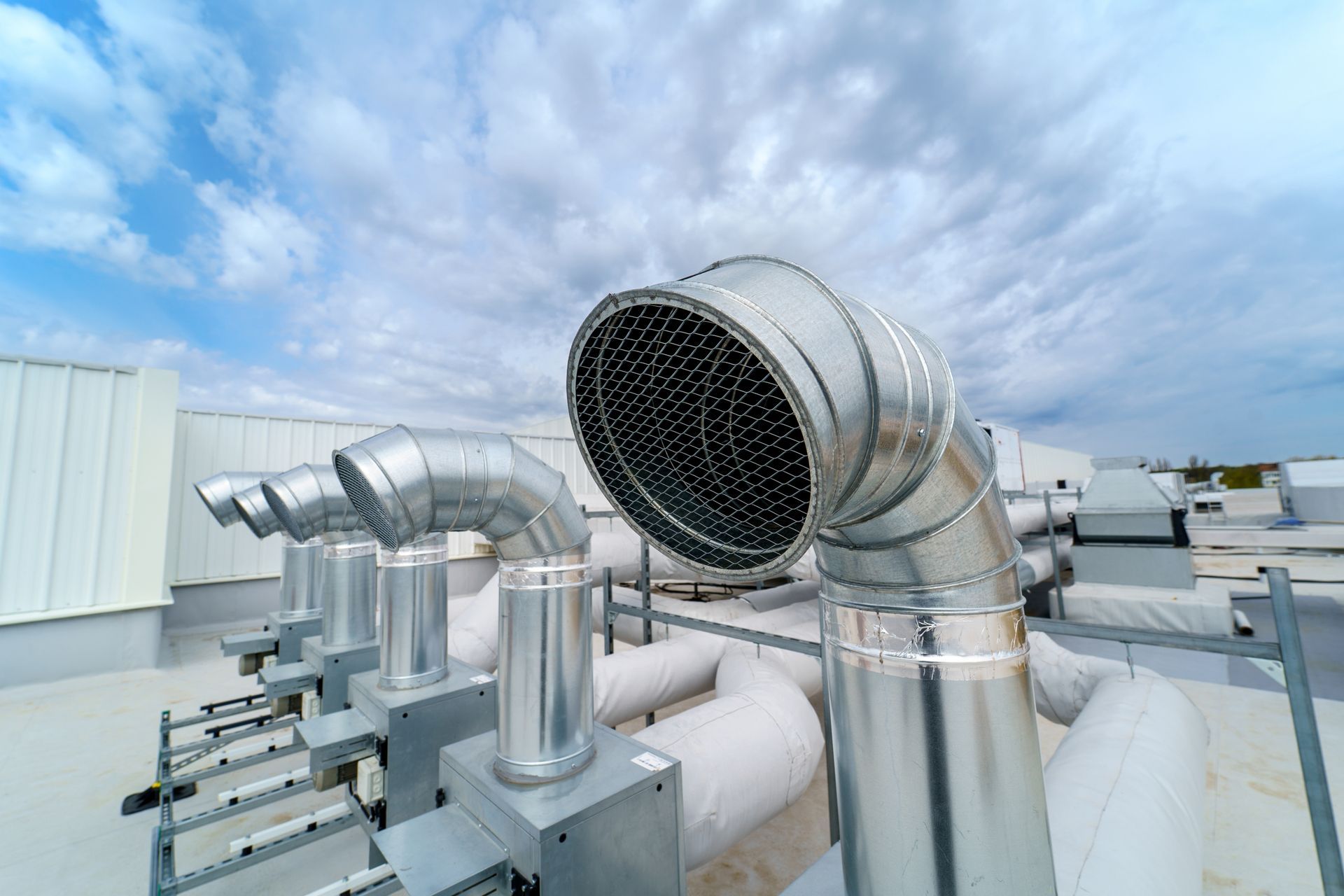
What Happens During a Commercial HVAC Installation
You'll begin with a site assessment that includes reviewing the building's square footage, ceiling height, insulation, window area, occupancy count, and internal heat load from lighting and equipment. The technician calculates the required tonnage and selects a unit that matches the load without oversizing, which would cause short cycling and humidity problems. If the installation involves a rooftop unit, the crew inspects the existing curb for level and structural integrity, then lifts the new unit into place using a crane or rigging system.
Once the unit is secured and connected to ductwork, electrical service, and gas supply, Pepicelli's Ice Air & Water commissions the system by checking airflow at each register, verifying thermostat response, testing safety controls, and confirming that refrigerant pressures and superheat values fall within manufacturer specifications. After startup, the space cools evenly during occupied hours, the thermostat maintains setpoint without constant adjustment, and the unit cycles predictably based on load rather than running continuously or shutting off prematurely.
Installation is typically scheduled during off-hours or weekends to reduce disruption, and the crew coordinates with electricians and other trades if the project involves new construction or a tenant improvement. Code compliance includes obtaining permits, arranging inspections, and documenting refrigerant charge and equipment specifications for building records.
What Business Owners Ask About Commercial HVAC Systems
Facility managers and business owners often want to know what the installation involves and how the system will perform once it's operational.
How long does a commercial HVAC installation take?
A rooftop unit replacement on an existing curb typically takes one to two days depending on access and electrical work. New construction installations take longer and depend on coordination with other trades.
What is the difference between a packaged unit and a split system?
A packaged unit contains all components in one cabinet mounted outdoors, while a split system separates the condensing unit from the air handler, which is installed indoors. The choice depends on available space and building layout.
Can the system integrate with a building automation system?
Most commercial units support integration through compatible thermostats or control interfaces that communicate with centralized building management platforms.
Why does the unit need regular maintenance after installation?
Commercial systems operate longer hours and handle higher loads than residential equipment, so filters, coils, belts, and refrigerant levels need regular attention to prevent performance loss and unplanned downtime.
What codes apply to commercial HVAC installations in Duanesburg?
Installations must meet state mechanical code, energy code, and local building code requirements, which govern equipment placement, ventilation rates, refrigerant handling, and electrical connections.
If your building needs new equipment or a system upgrade, contact Pepicelli's Ice Air & Water to review your load requirements and schedule an installation that keeps your business running.